The growing need for powerful computing and large-scale data storage is causing electricity consumption in data centers to rise quickly. According to the International Energy Agency’s Electricity 2025 report, data centers are expected to use over 1,000 terawatt-hours of electricity each year by 2026. This is nearly double what they used in 2022. This sharp increase is pushing the industry to find smarter, more energy-efficient cooling solutions that can keep up with expanding digital systems while reducing their impact on the environment.
PFAS (per- and polyfluoroalkyl substances) have long been used in data center cooling, particularly in the form of engineered dielectric liquids for immersion cooling. These synthetic fluids are valued for their thermal stability, electrical insulation, and chemical inertness. But growing global scrutiny over PFAS due to their environmental effects and potential health risks has raised eyebrows about their continued use. While research into PFAS-free alternatives is underway, the cooling industry still relies heavily on PFAS-based fluids. The transition to safer and more sustainable cooling liquids such as biodegradable esters and other engineered synthetics, is in its early stages. That is why it faces technical, regulatory, and cost-related hurdles. A fully PFAS-free cooling ecosystem remains a long-term goal rather than a current reality.
Data Center Growth and Demand for Efficient Cooling
The rapid growth of hyperscale data centers is directing a notable rise in global electricity demand. According to the IEA, data center electricity consumption surged by 30% in 2023 alone. This is largely fueled by the rise of AI workloads. By 2026, energy use in this sector is expected to account for nearly 4.5% of global electricity demand.
The report indicates that data centers may soon surpass traditional industrial sectors in electricity consumption in several regions. This is largely due to the rising demand for generative AI, cloud platforms, and edge computing- technologies that need massive computational power. Interestingly, some hyperscale data centers now consume as much electricity as small cities. The most dramatic demand increases are being seen in North America, Europe, and parts of Asia, where digital infrastructure is expanding quickly.
To manage this growing energy footprint, liquid cooling is emerging as a critical strategy. The traditional air-based systems rely on large-scale HVAC setups and fans. Whereas liquid immersion cooling enables direct heat transfer using engineered dielectric fluids. Also, studies suggest that this approach can lower cooling-related power consumption from around 40% of a data center’s total energy use to as low as 10%, while simultaneously supporting higher computing densities. Although still in early adoption stages, yet liquid cooling is progressively becoming the choice in high-performance computing or HPC, and AI-driven environments. At the same time, traditional cooling methods struggle to keep up with thermal loads.
Renewable Energy Integration in Data Centers
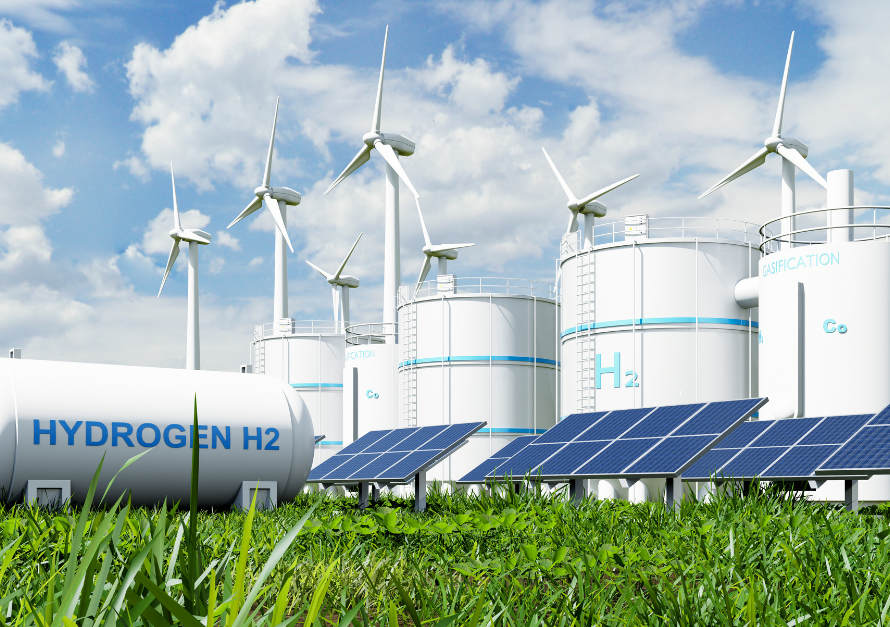
As data centers grow in numbers and energy consumption rises, many operators are putting their finances into renewable energy sources such as solar and wind to improve sustainability as well as reduce grid dependency. While solar power inherently produces direct current (DC), most data center infrastructure is designed to operate on alternating current (AC), requiring conversion. This AC-DC conversion can cause energy losses. This is especially in battery-backed systems or when integrating on-site solar. To improve efficiency, some next-generation data centers are looking for hybrid power architectures that optimize DC usage for specific subsystems, though widespread adoption remains limited and technically complex.
The IEA report states that by 2026, nearly 60% of new data center capacity is expected to be powered by renewable energy, with hyperscale operators leading the transition. Some of the world’s largest cloud service providers are making promises to power data centers entirely with green energy by the end of the decade. But current renewable energy supply constraints pose a challenge. The rapid expansion of AI computing clusters, which require more energy-intensive cooling, is further exacerbating power demand.
To reduce the dependence of data centers on the grid during peak demand hours, solar-powered battery storage systems are being looked at as a possible solution. These setups can help in offsetting energy loads and improving overall efficiency. Some studies suggest gains of up to 10%, depending on the configuration and usage patterns. Coming to the U.S., the Department of Energy and the National Renewable Energy Laboratory, have put in their efforts in broader initiatives. Their goal was to utilize renewable energy and improve data center energy performance. While these efforts don’t specifically combine solar storage with advanced cooling, they show a growing focus on holistic approaches to efficiency. However, the report warns that in regions heavily dependent on fossil fuel-based electricity grids, emissions from data centers could increase significantly unless offset by substantial and sustained investment in carbon-free power generation.
The peak electricity demand in a few regions could rise by more than 20%. Countries like Ireland, the Netherlands, and Singapore have put up strict rules on new data center developments. This is done to manage electricity grid limitations. This further shows the growing challenge of balancing power demand and supply.
The rising focus on Green AI, a movement to power AI infrastructure using non-fossil sources like nuclear, solar, and wind further emphasizes the need for clean, reliable electricity in data centers. As demand for AI computing rises, so does the push for sustainable, low-emission power strategies to support it at scale.
Rethinking Cooling Fluids: Beyond PFAS
Despite the rising demand for sustainable solutions, most high-performance liquid cooling systems currently still rely on fluorinated dielectric fluids, many of which are classified as PFAS. These liquids, such as Fluorinert™ and Novec™ by 3M, offer unmatched thermal stability and electrical insulation, making them the default choice for immersion cooling. But rising global pressure to phase out PFAS has given a boost to research into next-generation alternatives.
The challenge lies in recognizing fluids that give the same performance without the long-term environmental and health risks. Early-stage solutions include biodegradable esters, plant-based synthetics, and hydrofluoroolefins (HFOs). HFOs are a newer class of fluorinated compounds with lower global warming potential. While HFOs show promise, some may still be categorized under PFAS depending on regulatory definitions. This highlights the complexity of the transition. Most of these alternatives still need validation for long-term stability, material compatibility, and cost efficiency.
For the liquid cooling industry to come in pace with global sustainability goals, the development of high-performance, commercially viable, and truly PFAS-free dielectric fluids remains an urgent priority, especially as regulatory frameworks tighten across international markets.
Sustainable Cooling Fluids: A Work in Progress
With rising scrutiny around PFAS-based cooling fluids, the data center industry is actively looking for sustainable alternatives. But viable large-scale replacements still remain in the pipeline. Research into biodegradable and PFAS-free fluids, including those derived from plant-based esters or synthetic compounds, has gained momentum in recent years. Companies like Cargill have designed early-stage formulations, for instance, NatureCool™ 2000. It is a plant-derived dielectric fluid developed for immersion cooling which leaves a lesser environmental footprint.
Despite their promise, these next-generation cooling liquids are still in limited deployment and face significant technical challenges. Matching the thermal conductivity, stability, and non-conductive properties of established PFAS-based liquids has proven difficult. Moreover, long-term reliability data and material compatibility testing are still underway. At present, PFAS-based dielectric fluids remain the industry standard for high-performance liquid cooling due to their proven efficiency and safety record.
Nonetheless, investment in sustainable cooling fluid R&D continues to grow/ The goal is to develop commercially scalable, PFAS-free alternatives in the coming years. The transition will require not only chemical innovation, but also regulatory support and industry-wide collaboration to shift the infrastructure around how these fluids are manufactured, used, and disposed of.
Early-Stage Alternatives and Industry Developments
Several companies are actively putting finances into next-generation cooling fluids. Their aim is to reduce environmental impact along with maintaining the performance standards required for data center immersion cooling. Dow, for example, has introduced DOWSIL™ ICL-1000 Fluid. It is a silicone-based dielectric fluid with low global warming potential (GWP) and zero ozone depletion potential (ODP). Chemours has developed Opteon™ 2P50, a hydrofluoroolefin (HFO)-based fluid engineered for two-phase immersion cooling, which has demonstrated potential energy savings of over 90% in controlled environments.
As pressure mounts to phase out PFAS, companies like 3M are exiting the production of legacy cooling fluids such as Fluorinert™ by 2025. It is shifting focus to alternative formulations. Perstorp has announced Synmerse™ DC, a biodegradable, PFAS-free immersion fluid tailored for high-efficiency thermal management, though it is still in early commercial deployment. Also, Shell is developing its own range of immersion cooling fluids. It is expected to launch in 2025. The aim is to target the high-performance computing segment.
In the biobased category, Cargill has developed NatureCool™ 2000. It is a plant-derived biodegradable fluid and was first tested in 2024 in collaboration with UDI. While it is promising, it is still a part of a broader research effort. The goal is to determine the long-term viability of natural esters for mission-critical cooling environments.
These developments reflect the industry’s growing commitment to identifying alternatives to PFAS-based liquids. There are some hiccups for most of these solutions are in the R&D or early adoption phase. Thus, widespread commercial availability is still several steps away.
Conclusion
The push for energy-efficient and environmentally responsible cooling fluids signals a critical shift in how data centers approach thermal management. PFAS-based liquids is still the dominant standard due to their proven performance. At the same time, mounting regulatory and environmental pressure is boosting the pace of innovation across the industry.
According to the IEA, data centers are on track to consume over 1,000 TWh of electricity annually by 2026. It is a wake up call that highlights the urgency of sustainable solutions. In response, key players are putting their finances into next-generation dielectric fluids along with renewable energy integration and early-stage alternatives to PFAS. Many of these developments are still in the R&D or early testing phases, but they reflect the industry’s long-term vision.
The road ahead is complex. There are technical, regulatory, and commercial hurdles to overcome. But the direction is clear: redefining data center cooling through clean energy. Lastly, responsible innovation will be central to building a low-carbon digital infrastructure.