

The anti-aging cosmetics market is experiencing a revolution as more and more people are looking for ways to not just look younger but also feel confident in their own skin. It is becoming more of a movement towards self care and well being. In 2020, the global cosmetics industry was estimated at around US$ 380 billion and it is further projected to hit US$ 463.5 billion by 2027. Meanwhile the anti-aging market is also thriving and according to the forecast it is to reach a market value of US$ 83.2 billion by next decade. Today, over 60% of consumers are choosing to go for sustainable and eco-friendly personal care products. Innovation along with a sense of responsibility is becoming the to go trend.
Green Ingredients/Sustainable Ingredients
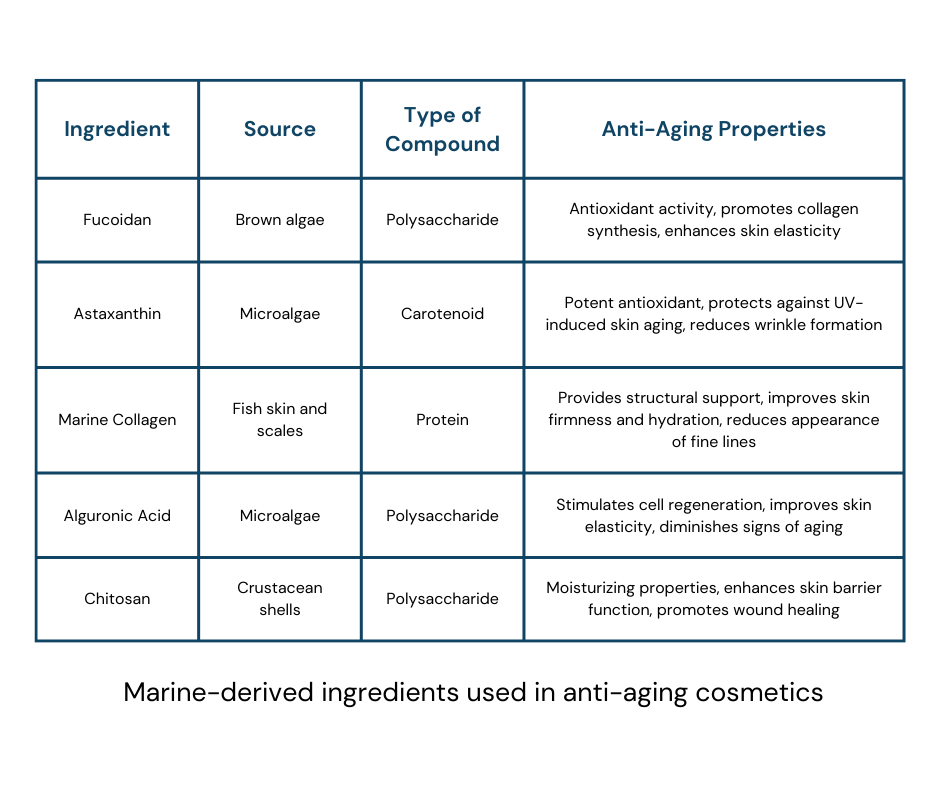
Marine ingredients are proving to be game-changers in the anti-aging world as they come straight from the ocean and deliver powerful benefits for skin health. Out of the global anti-aging market, 15% is accounted to marine-based components. Many countries from the Asia-Pacific, such as Japan, China, and South Korea, are leading in the segment as they are making up nearly 40% of the demand. Europe, known for its environmental standards, contributes around 25%, showcasing how widely embraced these ingredients have become.
No doubt, marine ingredients are becoming popular. This is due to the fact that they encompass the ability to combat fine lines, wrinkles, and other visible signs of aging. Many products use bioactives from the ocean, like multi-collagen peptides sourced from fish skin, which help improve skin firmness. Carotenoids such as β-carotene and astaxanthin are also key sources, offering antioxidant protection from harmful UV rays. These ingredients aren’t just trendy, they’re backed by science too.
Certain polysaccharides extracted from algae have been shown to improve skin hydration and elasticity. On the other hand, marine-derived peptides can induce collagen production, leading to reduced wrinkle formation. Additionally, compounds like alguronic acid, produced by microalgae, are incorporated into skincare formulations as they are known for their regenerative properties. The incorporation of these marine ingredients into cosmetic products not only leverages their potent anti-aging effects but also aligns with the growing consumer demand for natural and sustainable skincare solutions.
 A wave of brands is tapping into the potential of marine resources. In 2022, Haeckels, a brand from the UK, launched a line featuring seaweed extracts harvested sustainably. Amorepacific, the South Korean beauty giant, introduced a marine collagen and astaxanthin range in 2023. France’s Algotherm gained recognition in 2021 with algae-enriched hydration products, while Oceanwell from Germany created sea mineral-based rejuvenating solutions in 2022. Even globally known brands like The Face Shop (2023) and Shiseido (2022) are embracing these ingredients, showcasing kelp extracts and deep-sea water in their innovative formulations. These are some of the brands that reflect a shift from synthetic solutions like retinoids to natural options like astaxanthin, which provide similar benefits without the drawbacks.
Plant metabolites are emerging as heroes in the anti-aging skincare arena. Packed with antioxidants and anti-inflammatory properties, they’re nature’s way of slowing down the aging process. These plant metabolites are very effective as they tackle oxidative stress, one of the main culprits behind aging. Polyphenols, found in green tea and grapes, fight off free radicals, while terpenoids from plants like rosemary reduce inflammation. Flavonoids, which are present in citrus fruits, improve skin elasticity and hydration, giving the skin a youthful, radiant glow. Bakuchiol, extracted from the Psoralea corylifolia plant, has gained recognition as a natural alternative to retinol as it promotes collagen production and reduces fine lines without the associated irritation. Similarly, matcha green tea, rich in catechins, provides antioxidant benefits that help maintain skin elasticity and reduce inflammation.
.png?alt=media&token=98eebc6d-22bb-4dcc-b352-fa2b3afa9dbc) Brands are taking notice and creating transformative products using these natural ingredients. KORA Organics from Australia launched a noni fruit extract-infused line in 2022, celebrated for its antioxidant properties. Burt’s Bees in the United States followed up in 2023 with a range using grape seed extract to combat aging. In 2022, Forest Essentials which is from India unveiled products that used neem and turmeric rooted in traditional healing practices. Herbivore Botanicals from the U.S, introduced a blue tansy oil-infused line in 2023. Meanwhile Tata Harper incorporated calendula and alfalfa extracts in 2022. Even Origins, a well known name in skincare, made headlines in 2023 by including mushroom-based actives in their formulations. These examples highlight that plant-based solutions can be effective as well as sustainable.
Brands are taking notice and creating transformative products using these natural ingredients. KORA Organics from Australia launched a noni fruit extract-infused line in 2022, celebrated for its antioxidant properties. Burt’s Bees in the United States followed up in 2023 with a range using grape seed extract to combat aging. In 2022, Forest Essentials which is from India unveiled products that used neem and turmeric rooted in traditional healing practices. Herbivore Botanicals from the U.S, introduced a blue tansy oil-infused line in 2023. Meanwhile Tata Harper incorporated calendula and alfalfa extracts in 2022. Even Origins, a well known name in skincare, made headlines in 2023 by including mushroom-based actives in their formulations. These examples highlight that plant-based solutions can be effective as well as sustainable.
Biotics are changing the skincare game by focusing on the skin’s natural microbiota. As per BASF’s 2024 report, biotic-based products today make up 10% of the anti-aging market and are growing at a rate of 8.5% annually. Biotics work with the skin’s natural ecosystem. Probiotics like Lactobacillus strengthen the skin’s barrier, protecting it from environmental stressors. Meanwhile postbiotics, created through fermentation, provide peptides and fatty acids that hydrate and repair the skin. These ingredients are gentle and at the same time powerful, making them ideal for anti-aging care. Gallinée, a French brand, introduced probiotic skincare in 2023. In the same year, U.S.-based Tula Skincare expanded its line with probiotic-infused hydration products. Aurelia Skincare from the UK debuted bifidobacterium ferment-based solutions in 2022. South Korea’s Dr. Jart+ brought innovation in 2023 by combining probiotics with hyaluronic acid, creating products that bridge traditional remedies with modern science.
Regional Regulations of Synthetic Anti-aging Ingredients
Synthetic ingredients such as retinoids have long been a cornerstone and base of anti-aging skincare. But as awareness grows around their environmental impact and potential health risks, regulators are stepping in.
Europe is at the forefront of this shift. Under the REACH regulation, synthetic chemicals undergo rigorous safety testing. The European Green Deal has accelerated the move towards bio-based solutions, with incentives for companies investing in sustainable alternatives. Meanwhile, in Asia-Pacific, South Korea’s Ministry of Food and Drug Safety (KFDA) promotes eco-friendly research, and Japan’s Ministry of Health, Labour and Welfare (MHLW) prioritizes safe, environmentally conscious formulations.
In North America, transparency is not taking the center stage. The U.S. Food and Drug Administration (FDA) requires brands to disclose all ingredients, giving powers to the consumers to make informed choices. Canada’s Cosmetic Regulations emphasize safety while also encouraging innovation in green alternatives.
Gaining regulatory approval for cosmetics is not an easy task. But at the same time, the push for sustainability is streamlining the process for green ingredients. In Europe, COSMOS certification is the gold standard for organic and natural cosmetics. APAC countries like South Korea and Japan offer fast-track approval for marine and plant-based actives and at the same time they also encourage research and innovation. In North America, the FDA’s Voluntary Cosmetic Registration Program (VCRP) enhances transparency that helps the consumers in trusting the products they choose.
Conclusion
The shift towards green ingredients is most likely to happen in the coming time as regulations are also leaning towards eco-friendly practices. Consumers are increasingly prioritizing clean beauty, pushing brands to replace synthetic and chemical-heavy ingredients with naturally sourced, biodegradable, and ethically produced compounds.
In the coming years, we can expect bakuchiol to further replace retinol, offering similar anti-aging benefits without irritation, while fermented botanicals and algae-based peptides will become mainstream substitutes for traditional synthetic peptides. Lab-grown plant extracts and bioengineered collagen will likely take over animal-derived alternatives, enhancing sustainability while maintaining efficacy. Additionally, solvent-free extraction methods and upcycled skincare ingredients will further reduce environmental impact, ensuring a circular beauty economy where nothing goes to waste.
This transformation towards green innovation in anti-aging is not just a trend—it’s the future of skincare. As science advances, the industry will continue developing cutting-edge, nature-powered solutions that are both effective and environmentally responsible, paving the way for a more sustainable and skin-friendly approach to aging gracefully.
