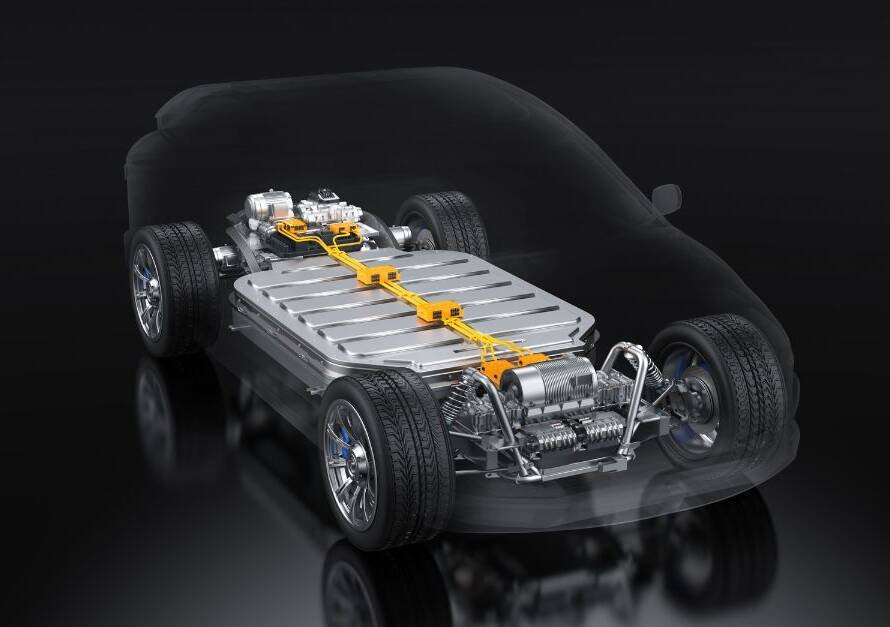
The cost of an EV battery accounts for more than 40% of the vehicle’s total cost; occasionally, this percentage can rise to 50% due to advancements in design and miniaturization. Among the various types of EV batteries, NMC (Nickel Manganese Cobalt) batteries are the most expensive, while LFP (Lithium Iron Phosphate) batteries are relatively affordable. Tesla uses NMC battery types, whereas BYD and other Chinese companies prefer to use LFP batteries.
Joint ventures are now a strategic approach to sustainability in the competitive EV market. A prominent example is the Automotive Cells Company (ACC), a joint venture formed in 2021 by Stellantis (45%), Mercedes-Benz (30%), and TotalEnergies/Saft (25%). ACC planned to invest approximately $7.6 billion by 2030 to establish three battery factories in the European Union (Kaiserslautern, Germany; Termoli, Italy; and Douvrin, France). The Douvrin factory started operating last year. However, the other two projects now face uncertainty as ACC is re-evaluating its strategy because of overly optimistic market projections.
Recently, ACC halted work on its battery gigafactories in Germany and Italy, citing a slowdown in EV sales growth and evaluating market trends. However, EV sales in Europe increased by 14.8% year-over-year in April, outpacing non-electrified car sales. Their is a high possibility that their interest might be leaning towards LFP batteries because of their low price. This production pause poses a risk to ACC’s business, as establishing fully operational factories might require significant lead time. Conversely, it may yield positive outcomes too, as the ACC considers transitioning to more cost-effective LFP cells. These cells offer crucial advantages such as lower cost, greater durability, and simpler mineral sourcing. However, they have a lower energy density compared to NMC cells. These advantages have made it possible for Chinese automakers to sell cars in Europe at competitive prices.
Mercedes and Stellantis aren’t the only automakers cooling on new European battery factories. Last month, Volkswagen announced that its European battery factories might take longer to reach full capacity. Additionally, both Volkswagen and Renault have stepped back from plans to sell shares in their EV or battery businesses.
Geopolitical factors further complicate the landscape. The U.S. government has increased tariffs on Chinese EVs from 25% to 100%. The European Union has also proposed tariffs on Chinese EV imports of up to 38%. Given these developments, onshoring LFP production in Europe becomes increasingly necessary.
Considering that cost is still the biggest obstacle to EV production and that the majority of LFPs are currently manufactured in China, making the switch to domestic LFP production seems more sensible. By moving LFP production in-house and taking advantage of its cost advantages, ACC can improve its competitiveness in the changing EV market, address geopolitical and economic issues, and expect long-term growth.