Polyetheretherketone (PEEK) has long occupied the top tier of engineering polymers. What has changed in recent years is not the core chemistry but the way the material is being positioned and specified.
By 2025, three developments had become more clearly visible: The expansion of higher-heat and more processable PEEK and PAEK grades, a series of portfolio and alliance moves that broaden supply options, and a regulatory environment that places clearer operational requirements on how polymer pellets and medical-grade materials are handled.
Together, these developments reflect a gradual but meaningful shift in how PEEK is managed and deployed. In that sense, PEEK 2.0 describes a change in context rather than a fundamental reinvention of the polymer itself.
Technology step change: From classic PEEK to a tunable high-heat family
Classic PEEK is well understood. It has a glass transition around 143°C, a melting point close to 334°C, and a continuous-use temperature in the mid-200s, along with excellent chemical resistance and fatigue performance. These properties enabled its long-standing use in aerospace clips, oil and gas seals, medical implants, and semiconductor components.
What has evolved is how the PEEK and broader PAEK family are being tuned to address more specific operating windows. At the high-temperature end, grades such as Syensqo’s KetaSpire PEEK XT raise the glass transition temperature by roughly 25° to 30°C and increase the melting temperature by around 40° to 45°C compared with standard PEEK. This additional thermal margin — combined with resistance to aggressive chemicals, sour gas (containing significant amounts of hydrogen sulfide and typically producing a rotten egg smell, hence the name), and steam — extends the usable envelope of PEEK into applications that previously relied on polyimides, ceramics, or metal alloys. Typical use cases are high-temperature pump components, long-life seals in sour gas environments, and steam-sterilized parts where dimensional stability is critical.
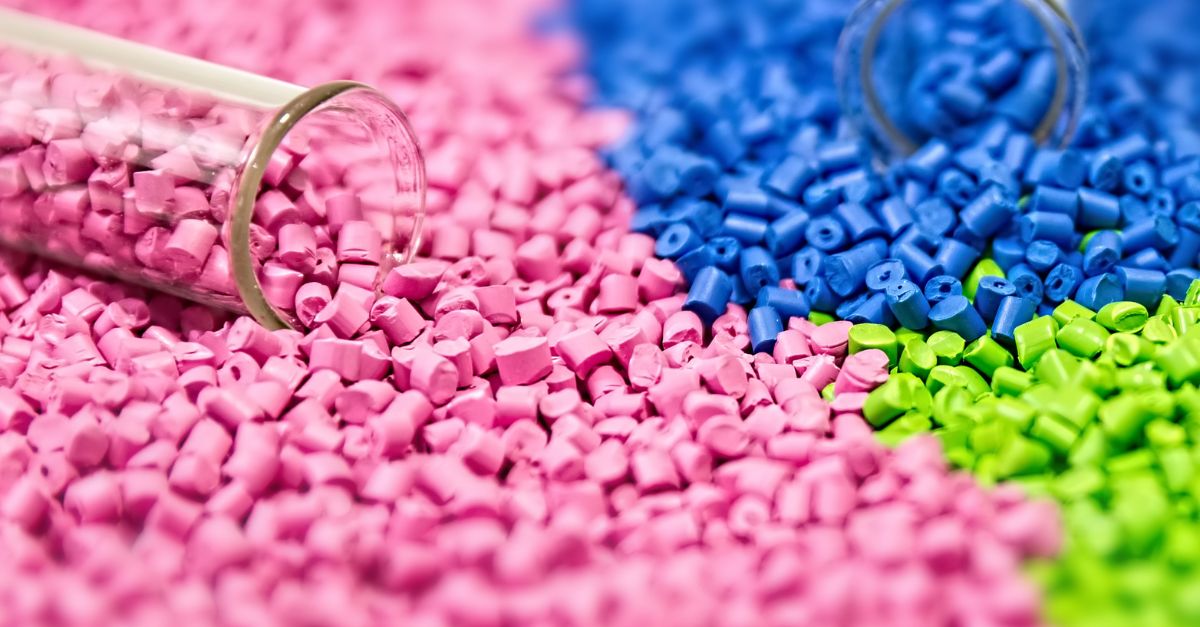
On the other side of the coin, Victrex’s LMPAEK polymer, highlighted again by the company in August 2025 following multiple industry awards, gives PAEK-level performance with a lower melting temperature as well as a wider processing window than conventional PEEK. This makes it suitable for tapes, fiber-reinforced laminates, and complex molded parts where processing efficiency and design flexibility are key constraints. It does not replace high-heat PEEK, but it illustrates how PAEK materials are increasingly offered as a graded family rather than a single, fixed-performance material.
Around these base resins sits a mature ecosystem of reinforced and functionalized grades. Glass- and carbon-fiber-filled PEEK continue to account for a significant share of structural applications, while tribological, antistatic, and electrically functional compounds enable more targeted specification across demanding environments. The material is increasingly supplied as a family of defined solutions rather than a single high-end resin left to be adapted by end users.
Commercial momentum builds
These material developments have been accompanied by visible commercial activity.
In early August, Bieglo, a Hamburg, Germany–based distributor specializing in high-performance polymers, announced plans to present an expanded portfolio at K 2025 with a strong emphasis on PEEK. The company highlighted its collaboration with Zhejiang Pfluon Technology, a Chinese producer of PEEK and related polymers. Industry coverage in September 2025 described this relationship as a strategic alliance that gives European OEMs and compounders additional sourcing options across different viscosities and specifications.
During the same period, Victrex used its August 2025 communications to further clarify the positioning of LMPAEK, emphasizing that the material had already been adopted in selected aerospace, energy, and electronics components where traditional PEEK processing constraints had limited adoption.
September also saw PEEK move more visibly into standardized components. Essentra Components launched a range of PEEK fasteners. These include screws, nuts, and spacers, marketed for use in fuel systems, ultra-high vacuum environments, corrosive chemical processing, and high-temperature assemblies. The target sectors are aerospace, automotive, electronics, and medical devices, where metallic fasteners may introduce corrosion, weight, or contamination risks.
Also, several US-based producers introduced new PEEK and PPS grades aimed at extreme temperatures and chemically aggressive environments. While these launches were incremental rather than disruptive, their timing fueled the view that late 2025 was an active period for performance-focused extensions of existing polymer platforms.
New regulatory context
Regulatory developments in 2025 introduced clearer operational requirements that directly affect how high-performance polymers such as PEEK are handled and qualified.

In the European Union, Regulation (EU) 2025/2365 on plastic pellet loss, adopted in November 2025, applies directly to companies that manufacture, transport, compound, or process polymer pellets. The regulation mandates containment measures, incident tracking, staff training, and documented pellet management practices. Because PEEK is typically traded and processed in pellet form prior to compounding or machining, these requirements have direct operational relevance for producers, distributors, and converters handling high-value PEEK materials.
In parallel, regulatory frameworks governing medical devices in both the EU and India continued to mature in 2025. PEEK components used in medical devices must now be supported by more structured documentation, quality systems, and post-market oversight, particularly for implants and components subjected to repeated sterilization. These rules do not target PEEK specifically, but they directly shape how medical-grade PEEK is qualified and supplied.
India also eased access to specialty materials by revoking a group of 14 BIS Quality Control Orders on November 12, 2025. While not specific to PEEK, this move reduced compliance barriers for importing specialized polymers and intermediates. Also, this improved access to high-performance materials for manufacturers in medical devices, electronics, and industrial equipment.
PEEK 2.0 makes its mark in new applications
Evidence of this evolution is visible across several end markets through public brand disclosures and component-level launches.
Material suppliers continue to identify the aerospace sector as a strategic focus. Victrex reported year-on-year growth in aerospace volumes during 2025. It was also supported by higher commercial aircraft build rates and ongoing qualification of PEEK and PAEK materials for clips, brackets, interior components, and structural elements. Public disclosures from aircraft OEMs on production rates and lightweighting priorities further fuel continued demand for qualified high-performance polymers without implying any single-material dominance.
Electrification is one area of steady expansion. Victrex’s 2025 strategic commentary highlighted PEEK-based solutions for motor insulation, slot liners, and rotor components in electric vehicles. As operating temperatures and voltages increase, higher-heat PEEK as well as PAEK grades give improved thermal stability and durability compared with conventional insulation systems.
Semiconductor manufacturing remains a stable application area. Suppliers throughout the year continued to promote PEEK components for wafer processing equipment, wet benches, and chemical delivery systems, citing low outgassing, low extractables, and chemical resistance. Higher-temperature grades are relevant here. This is because many semiconductor processes combine aggressive chemistries with elevated operating temperatures.
In medical applications, there was continued use of PEEK in spinal cages, cranial implants, dental components, and surgical instruments, as well as antistatic and ESD-safe grades for medical electronics and tooling.
Industrial hardware has more tangible evidence. Essentra’s September 2025 launch of standardized PEEK fasteners shows how high-performance polymers are increasingly specified for components traditionally dominated by metals in chemically aggressive, high-temperature, or even contamination-sensitive environments.
Strategic implications
Taken together, these developments point to a gradual repositioning of PEEK within engineering material portfolios. Higher-heat PEEK grades and adjacent PAEKs, such as LMPAEK, expand the usable operating window, while commercial alliances modestly broaden supply options. Regulatory changes in pellet handling and medical-device oversight introduce clearer operational expectations without singling out the material itself.
Most importantly, examples from aerospace, electrification, semiconductor equipment, and medical devices show that these materials are being specified into active programs rather than positioned as experimental upgrades. PEEK is unlikely to displace commodity polymers or replace metals wholesale. For companies planning material strategies toward 2030, however, PEEK increasingly functions as a well-defined, engineered platform material rather than a niche exception used only when no other option exists.
This article was originally published in PlasticsToday.